A Miraculous Covering part 1
EACH OF THESE ARTICLES ARE EXCERPTS FROM
AMERICA’S EPIC ADVENTURE TM - CTF'S NEWEST VBS CURRICULUM
From Lesson 3:The Patriots, Jesus covers our sin – Romans 4:7
A Miraculous Covering part 1
Halfway through the Seven Years War, George William Frederick became King George III of Great Britain. He was not a bad king. He was actually very smart (educated in commerce, agriculture, constitutional law, chemistry, physics, mathematics, astronomy, Latin, French, history, geography, and music). He liked to go to his country home from time to time and put on “peasant clothes” and do outdoor work. The upper-class people thought this was scandalous!
In his life of faith, he donated more than half of his personal income to charity, and he abhorred bad behavior, especially in his government. He made sure the Bible was taught to his and Queen Charlotte’s 15 children (9 sons, 6 daughters).
As king, nothing was more important than how good things were for the British Empire. Since the empire was most important and since everyone in the empire benefited from the Seven Years War, then everyone should help pay for the cost of the war. This would be done with new taxes. There was one big problem though – back in the colonies, they had pretty much governed themselves, including the taxes. That, however, was all about to change.
New Laws
The first thing the king and Parliament did was take care of a certain “crisis” called Pontiac’s Rebellion. They told the colonists there needed to be a standing British army in the colonies to protect them from Native Americans, especially Chief Pontiac. But the colonists thought they didn’t need the army, and it was also against the English Bill of Rights to have a standing army in peace time. This made some colonists worried about what might happen next.
Next, the king issued a Royal Proclamation that told the colonists they could not move west; they had to stay in their colonies. This went against the charters (founding documents) of the colonies that said they could grow, expand, and move west. Now there’s an army on the border preventing them from moving (which will make it easier to tax them)!
Then came all the taxes¹ that eventually hurt everyone in how much things cost and what jobs were available. When taxes are higher, prices go up and people don’t have as much money to buy things. Businesses don’t sell as much and have to fire people. However, when taxes are lower, people have more money, more things are sold, and more people have jobs.
Upset Colonists / Upset King
In protest of all of this, on the night of December 16, 1773, around 100 men boarded the merchant ships Dartmouth, Eleanor, and Beaver sitting in Boston Harbor and proceeded to toss 342 chests containing 90,000 lbs (45 tons) of tea into the harbor.
The event was so costly, it bankrupted the British East India Company.
So now, the King, who is trying to put money back in the treasury, has his largest business in the Empire go bankrupt. Wal-Mart is the biggest employer in the United States today; they employ 2.1 million people. What would happen if Wal-Mart went bankrupt overnight? It would be really bad for the country/economy.
Benjamin Franklin was in London at the time. When he heard of this, he was very upset, for he was fearful of what the king might do. He offered to personally help pay for the tea and called on the rest of the colonies to do so as well.
But it was too little, too late.
New laws were immediately passed. The military was put in charge of Massachusetts, most rights were taken away from the people living there, and Boston Harbor was closed (meaning lots of people lost their jobs) until all the tea was paid for.
The colonists called these the Intolerable Acts as they literally took away free elections, representative government, free enterprise, and freedom in general as British soldiers were now everywhere, monitoring everything you did and say.
Let’s Get Together
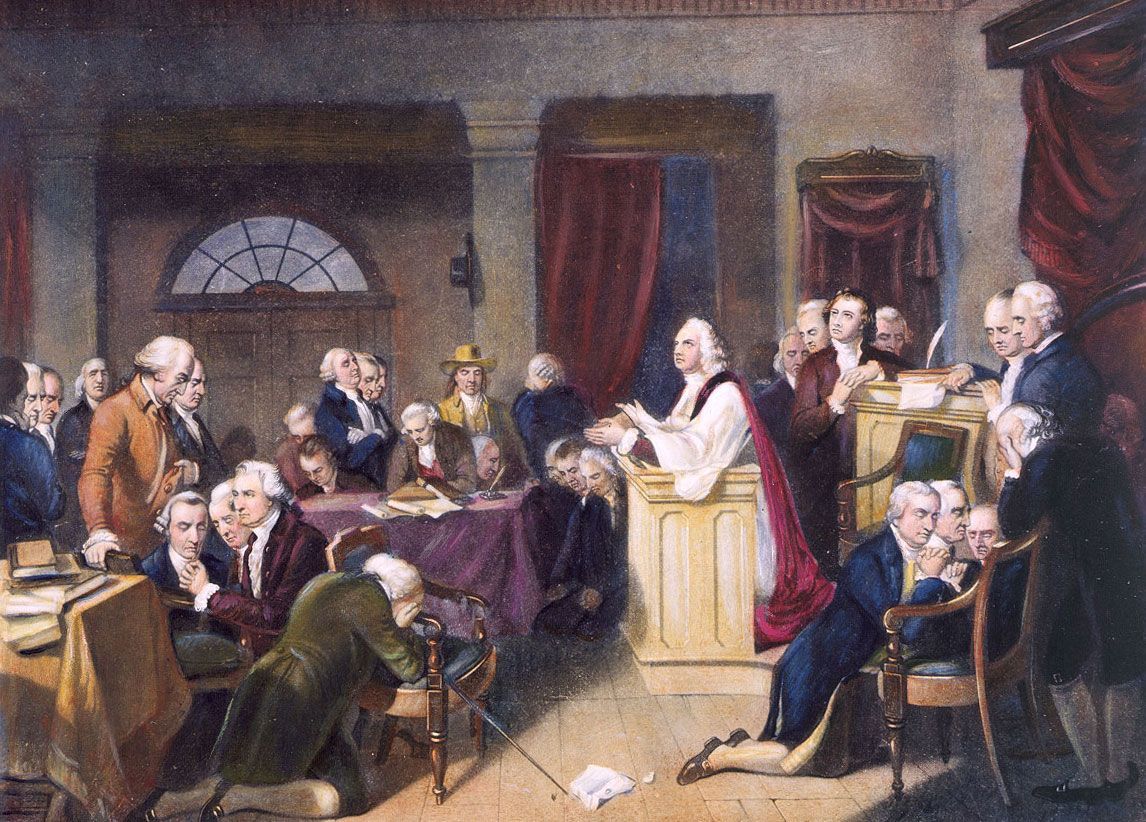
On September 5, 1774, fifty delegates from every colony except Georgia met together in Philadelphia. Sounds great, except they all quickly began arguing, blaming each other for all the problems. It was quickly realized that something needed to be done if they were to get along and get something done. Thomas Cushing of Massachusetts said they should start each day with prayer. That was something they could all agree on!
On the morning of September 7th, Jacob Duché of Christ Church came and held a prayer service that lasted 2 hours! From then on, they started each day with prayer and Bible reading. They were able to get many things done, including sending a letter to the king and Parliament, asking them to make things the way they used to be before all the new laws and taxes. They left Philadelphia in October with a plan to come back in May to see what all happened next.
1 For example: Navigation Acts, Molasses/Sugar Act, Currency Act, Stamp Act, Tea Act, Revenue Act, Indemnity Act, Commissioners of Customs Act, Vice Admiralty Act, etc.