A Shifting Foundation

G. Thomas Sharp • October 4, 2015

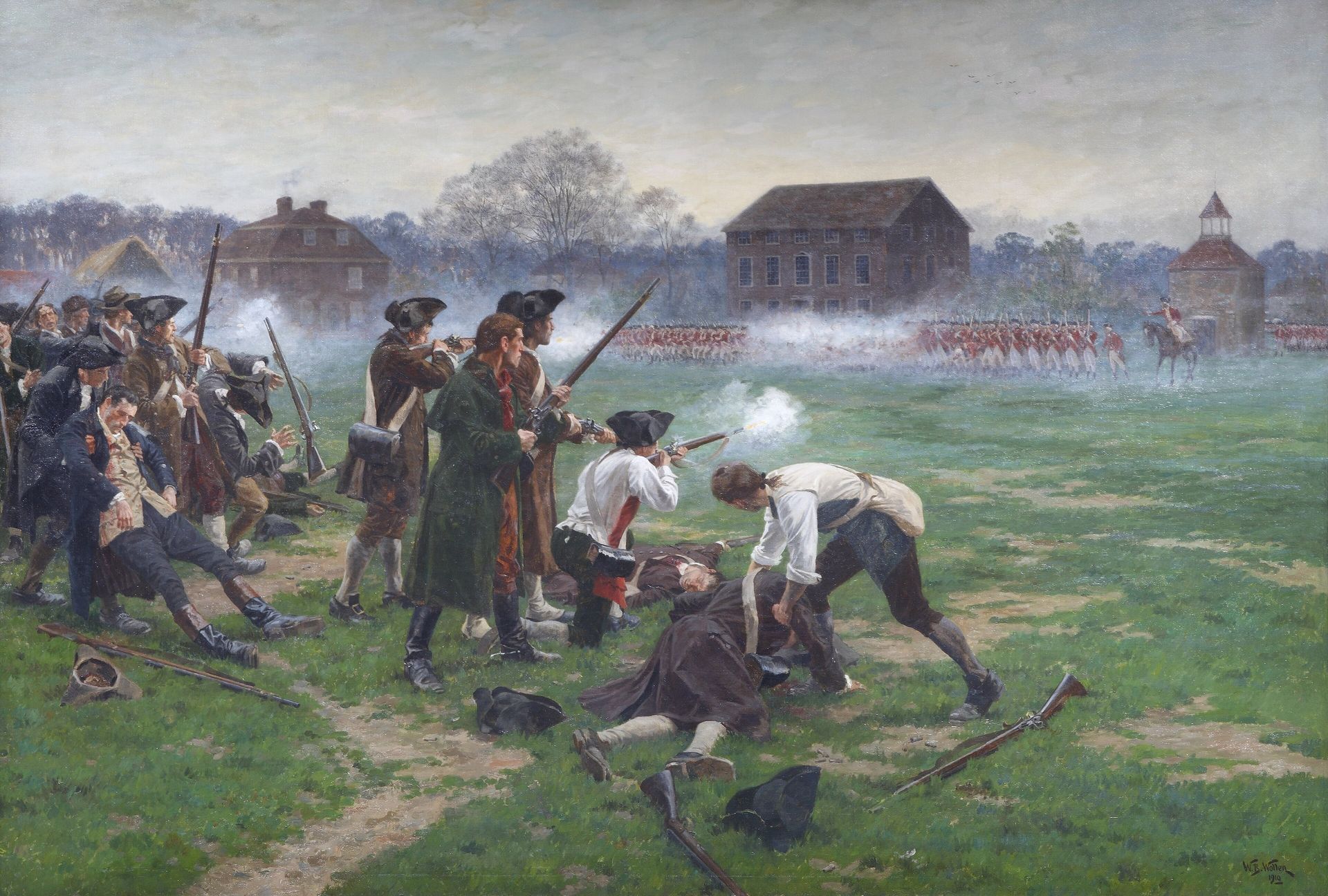
It is historically certain that most of American’s founders maintained a clear Biblical perspective about life’s ultimate purpose, i.e., to honor God and His Word, and they carefully guided the development of government to reinforce and encourage this ideal. Their efforts were not perfect, but their efforts reasonably maintained our Republic for more than 200 years.

The first significant chink in this armor came in 1870 when evolutionist Charles Elliot became the president of Harvard. He transitioned the classical and scriptural base in Harvard’s curriculum for one that was more in tune with the goals and philosophy of the Enlightenment.

At the time of the War Between the States (1860-1864), there were a few more than a hundred colleges and universities in the U.S., and they were either for the training of the clergy and/or were administered by the clergy.  But by the death of Queen Victoria (1901), Princeton University, the last of these universities, fell under the administrative savvy of non-clerical oversight. This signaled the beginning of a total secular control in higher education in America.

A more noticeable change came in 1925. This was caused from one of the many pegs that has been driven in the heart of Biblical Christianity and Judeo/Christian during the 20th century in America. The place was Dayton, TN, and the milieu was the debate between William Jennings Bryan and Clarence Darrow (an influential ACLU attorney) that took place during the Scopes’ Monkey Trial—which was a contest concerning the Constitutionality of the Butler Act. The Butler Act was a law in Tennessee that forbade the teaching of evolution in the public schools of Tennessee. Even though Bryan won the legal battle, he lost the public relations contest, and as the result evolution has taken an ever greater posture in the education of America’s children ever since.

It wasn’t long after the Scope’s trial until John Dewey (certainly by the 1930s), a social progressive, that was heavily invested in Darwinism, took the leadership of the America’s state schools. So, what’s the point? After the Bible was effectively removed as the primary premise for American thought, especially for our origin, our reason for being, our identity and our destiny, and was replaced by Darwinism, everything established on that foundation began to shift. So that by the 1960s it wasn’t a stretch to think that America’s school children must be protected from the so-called “myths” of the Bible.
Thanks so very much for your continued prayer and financial support for this ministry.

G. Thomas Sharp
Psalms 139:14

Hand in sand image
By Matt Miles April 19, 2026
In Genesis 12 the Lord calls Abraham (Abram) to be the father of a great nation. This all happened to Abraham at 75 years old. Some might say that is too late in life to start something new, especially a calling of that magnitude. Yet that was not the overwhelming part to me; that would come in verse 7 when the Lord said the land would be his offspring’s. Wait, what?! The Lord had a plan and His Providence would guide Abraham, even when Abraham did not have offspring and did not wait on the Lord. I have to wonder how I would have reacted to such a call and covenant. As we know from Psalms, the Lord guides and sustains all by His Providence for His name sake, which we are focusing on this year. But does Providence act on our timing? When God called Abraham, he had no children. Yet the promise given was that his offspring would be a great nation in a land saved for them. What we know now is that Abraham wouldn’t have his son Isaac until he was 100 years old, a full 25 years after the covenant was made. Most of the time we expect the Lord’s hand working in our life to be immediate, but that is not always the case. In some cases it might take years to experience the Providence coming to fruition. Remember Genesis 21:2 states Isaac’s birth was at the “appointed time.” This understanding should give us peace as we rely on Providence and, at times, are called to patience. Providence was again on display for us to understand that even in obedient sacrifice He will be glorified, as Abraham was asked to sacrifice his son, Isaac, who was inherently tied to the covenant of the Lord. Abraham was faithful in all aspects, even when most of us might say “no way” to that sacrifice to the Lord. Yet at the right time, through faithfulness in Abraham’s obedience, there was Providence providing behind him in the ram. Our faithful obedience sometimes feels like a tough ask from the Lord, but rest assured He is there, ready to lift up His name through us. Providence continued through time, 100 years later, after Isaac had his sons, Jacob and Esau. Then Jacob was blessed by the Lord with 12 sons, one of which was Joseph, who was sold to Egypt by his brothers. You probably recall all the ups and downs of Joseph’s life, yet he was faithful to the Lord throughout them all. Remember, there was a covenant at stake. The Lord, through His Providence, made sure he had Joseph where He needed him to save the great nation of Israel from famine. This Providence secured the covenant line to continue to Christ. Many times throughout history Providence has guided and protected His covenant, and now you and I can be blessed with inclusion in His great nation through Christ. If it had not been so, then we literally have no assurance of our salvation. Praise be to our Lord Jesus Christ that His Providence is faithful for all eternity, so we may know peace and have confidence in the promised destiny. Our ministry here at CTF has always emphasized the importance of Genesis 12, Abraham’s covenant. We share there is no difference in importance of Genesis 1-11 over chapter 12 and through the entirety of the Bible. The whole Bible is inspired to be trustworthy and to show His Providence throughout history for His name’s sake and also for our salvation. Blessings.
Fort Necessity, also known as the Battle of the Great Meadows
By Ryan Cox April 19, 2026
Fort Necessity, also known as the Battle of the Great Meadows
Show More