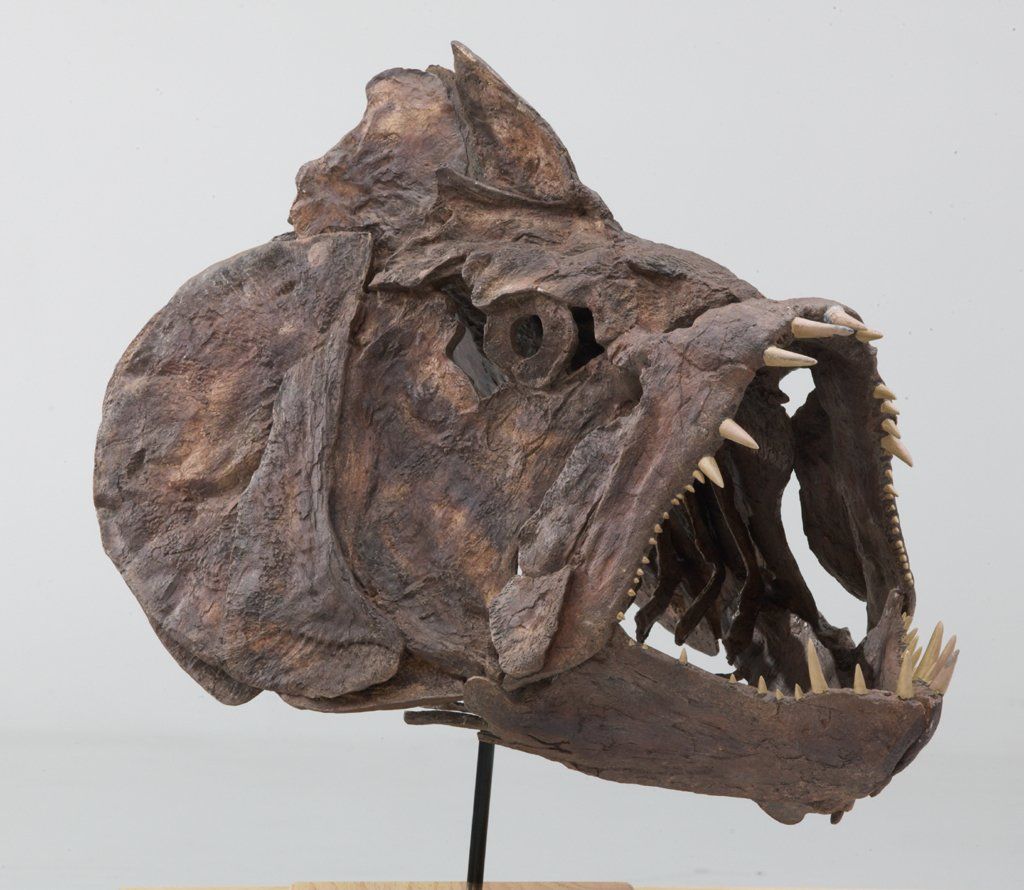

11ft Pteranodon longiceps
Name means: “Winged and Toothless” "long-headed"
About
Specimen: CMNFV 41358 (cast)
Discovery: Mike Triebold, 1991
Excavated: Gove County, KS
Weight: est. 20 to 30 lbs
Wingspan: 11 ft
Skull: 2.8 ft
Pteranodon fossils have been discovered in AL, KS, NE, SD, and WY, all of which were in marine sediments. Fish remains found in some fossils support the idea that Pteranodons were piscivorous (fish-eaters).
This specimen is one of the msot complete ever discovered. Due to their hollow and thin-walled bones, pterosaur fossils are often not well preserved. With this rare exception, a large perimeter was created from which the slab was removed and exposed in controlled lab conditions, revealing the amazingly preserved specimen. Multiple preserved muscle attachment points were used to analyze wing and muscle anatomy. The original fossil now resides in the Canadian Museum of Nature in Ottawa.
At the "wrist" (carpal joint between the metacarpal and radius), there is a specially designed bone called the pteroid. It is believed a membrane-like forewing attached to this bone and the shoulder. This flap could have functioned like the slats on the front of airplane wings. Additionally, the wings have an excellent aspect ratio of length to width (wingspan to chord) of 9:1. The albatross has a similar ration of 8:1, providing great soaring capabilities. Over half of the wing is actually a finger (fourth metacarpal, i.e. ring finger).
Other Fossils
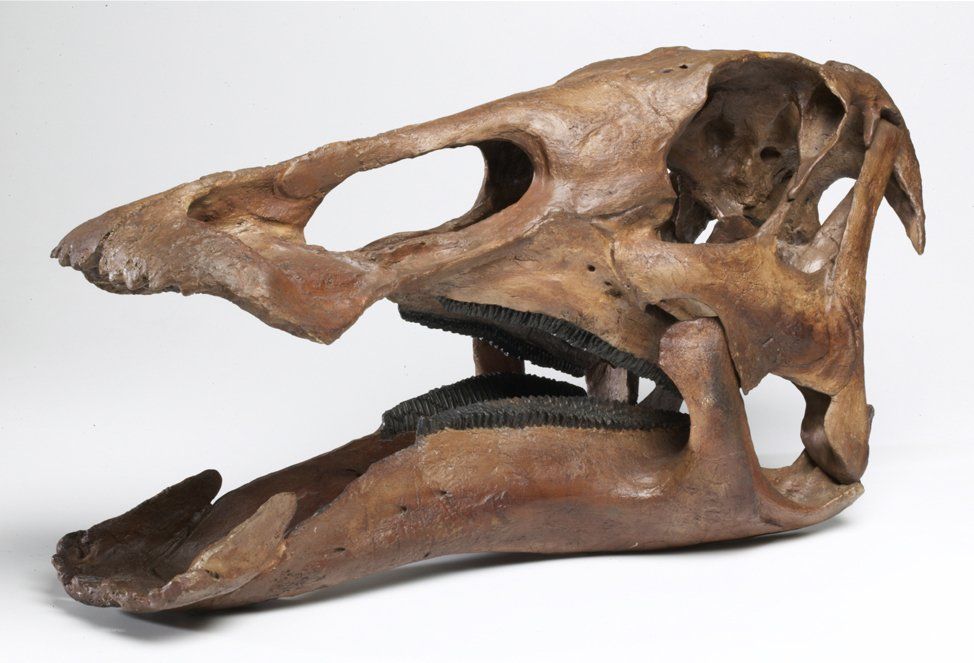
Edmontosaurus annectens
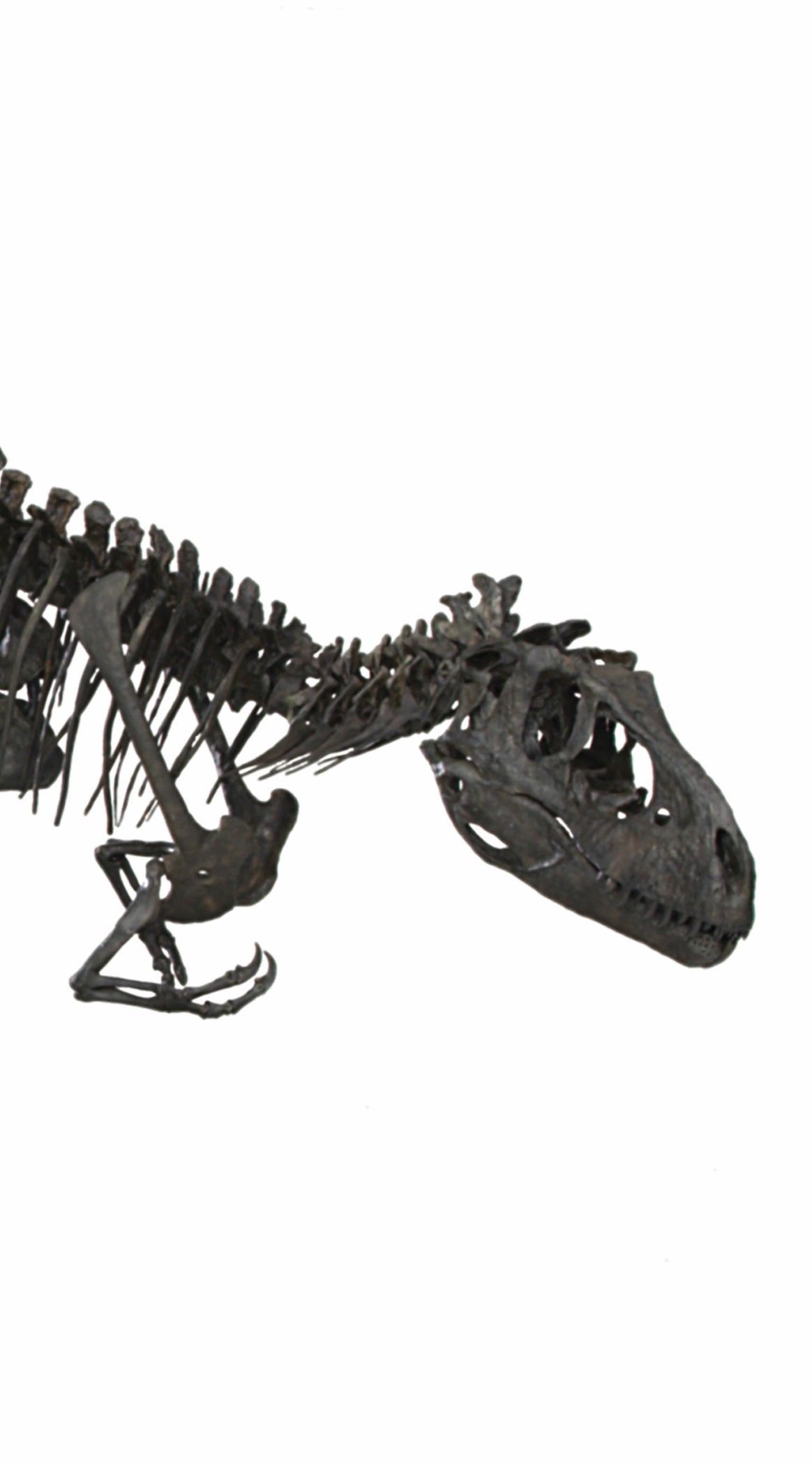
Albertosaurus sarcophagus
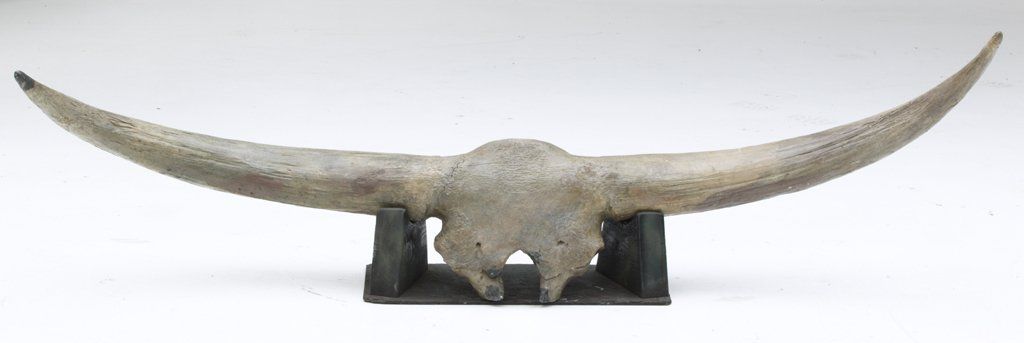
Bison latifrons
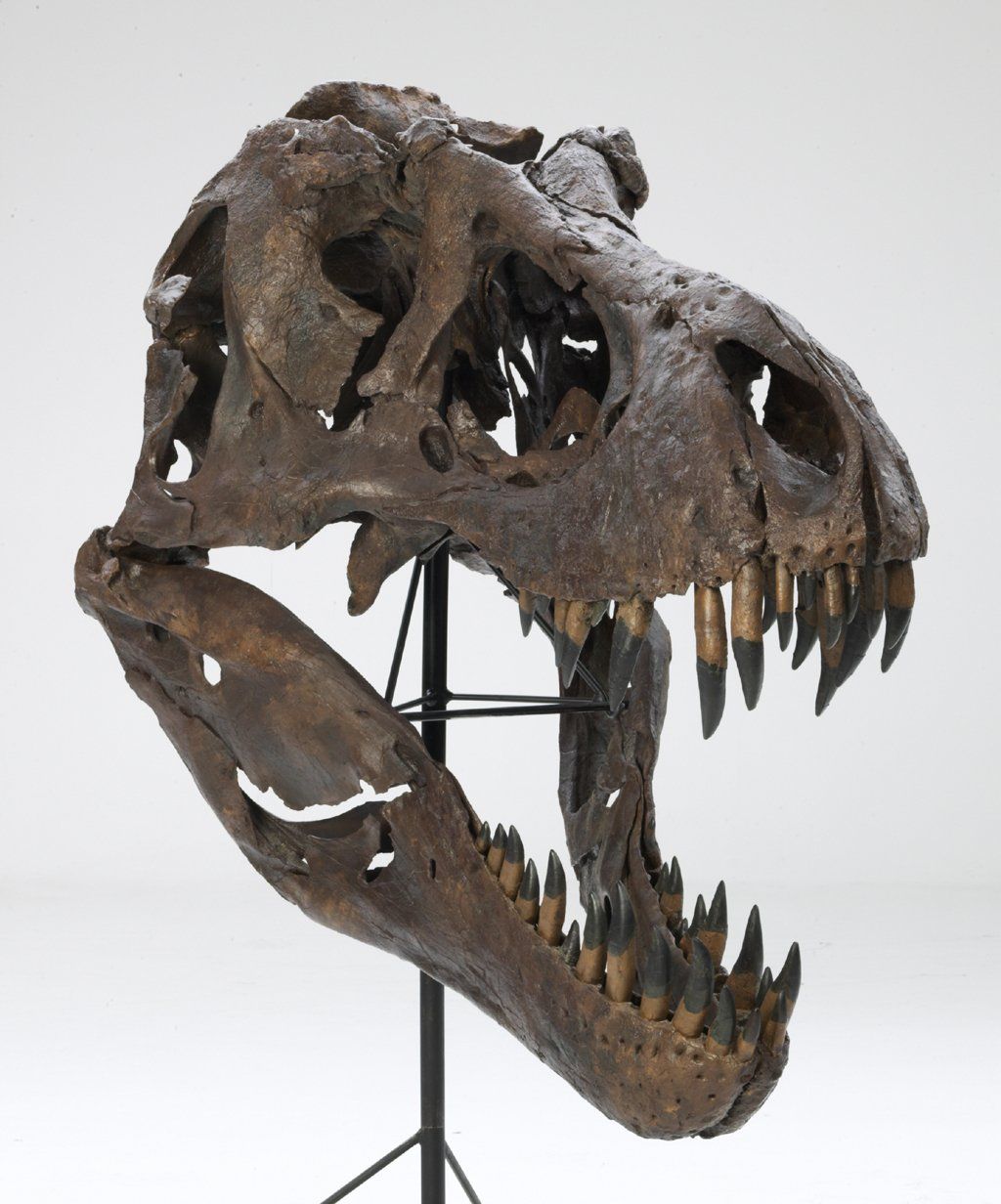
Tyrannosaurus rex
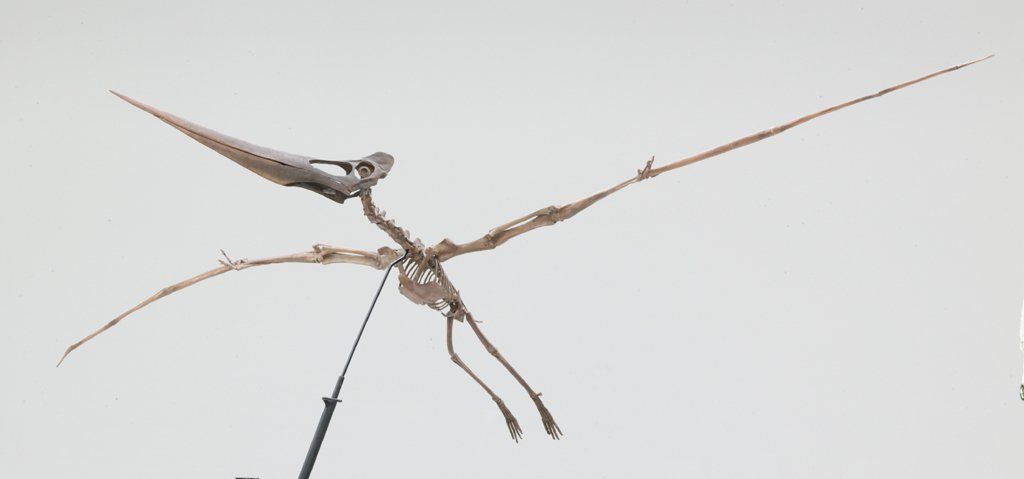
11ft Pteranodon longiceps
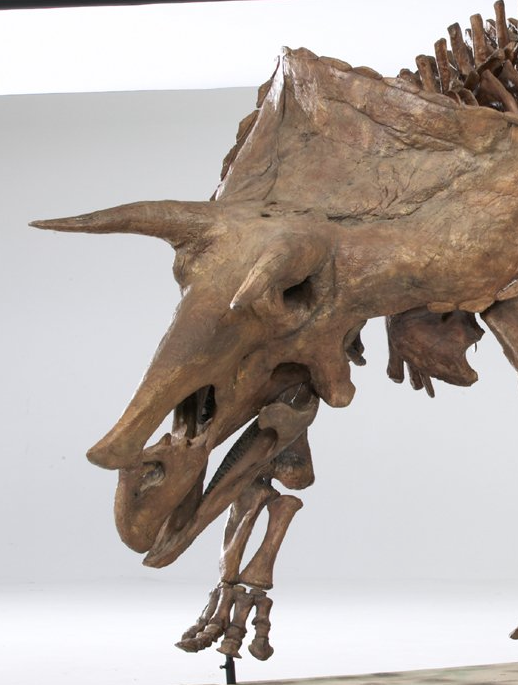
Triceratops prorsus
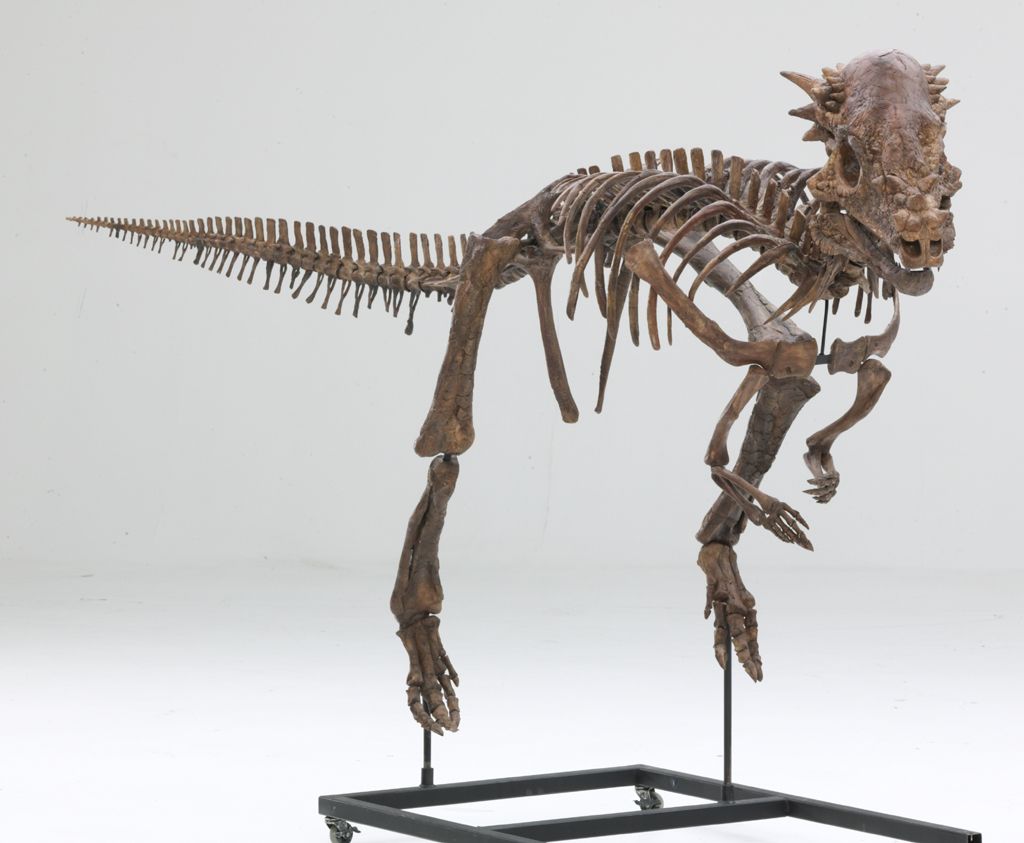
Pachycephalosaurus wyomingsis
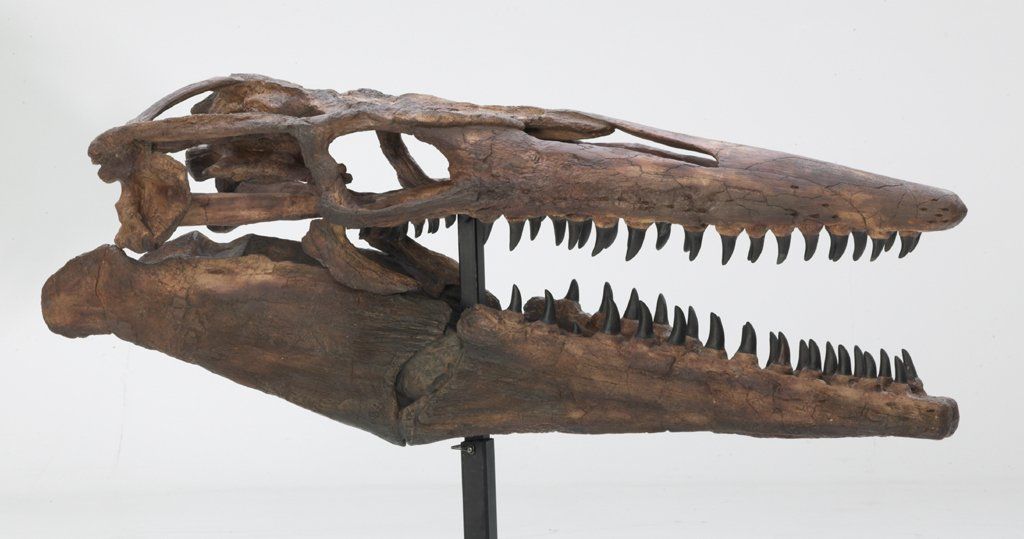
Tylosaurus proriger
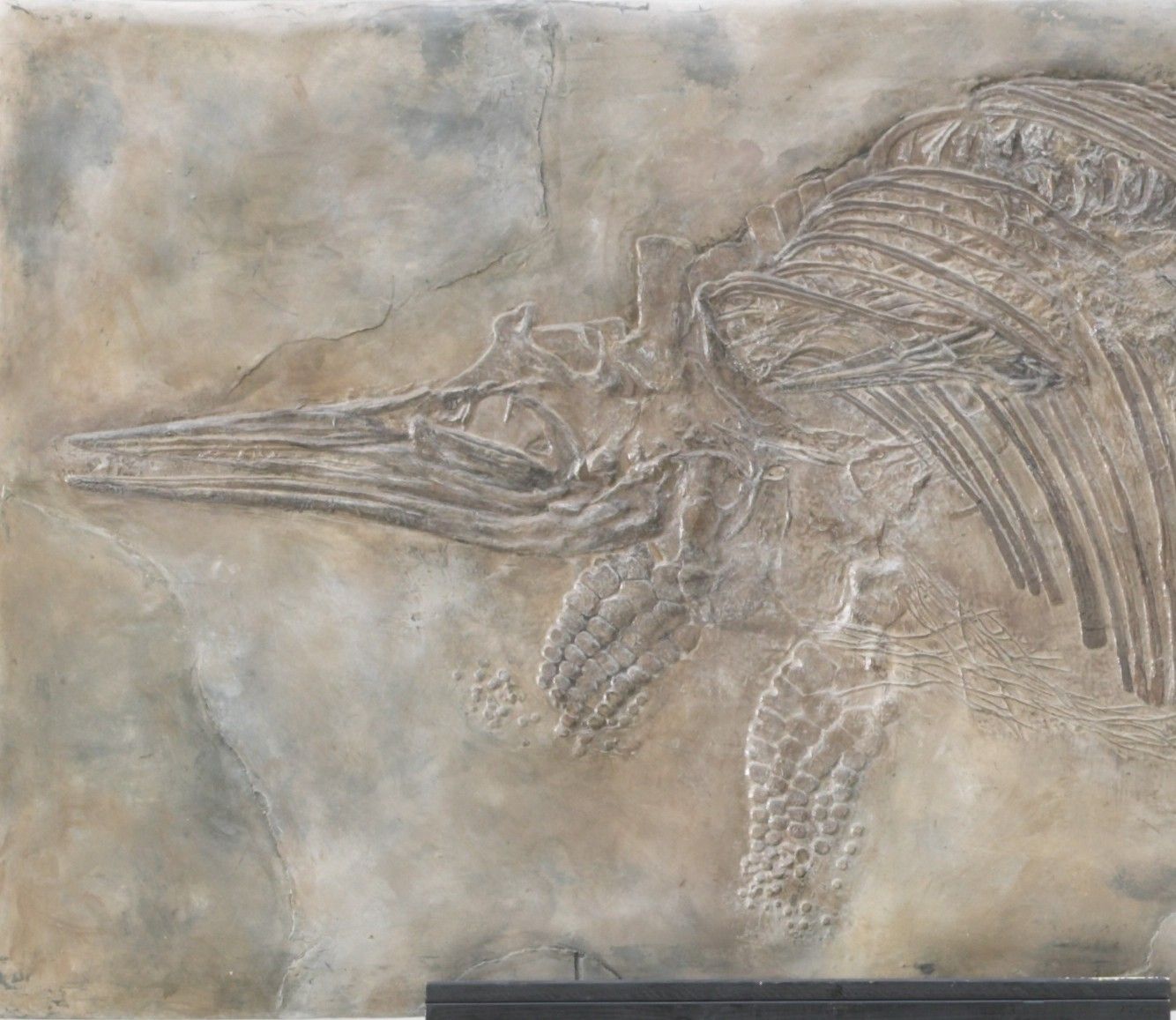
Stenopterygius quadriscissus
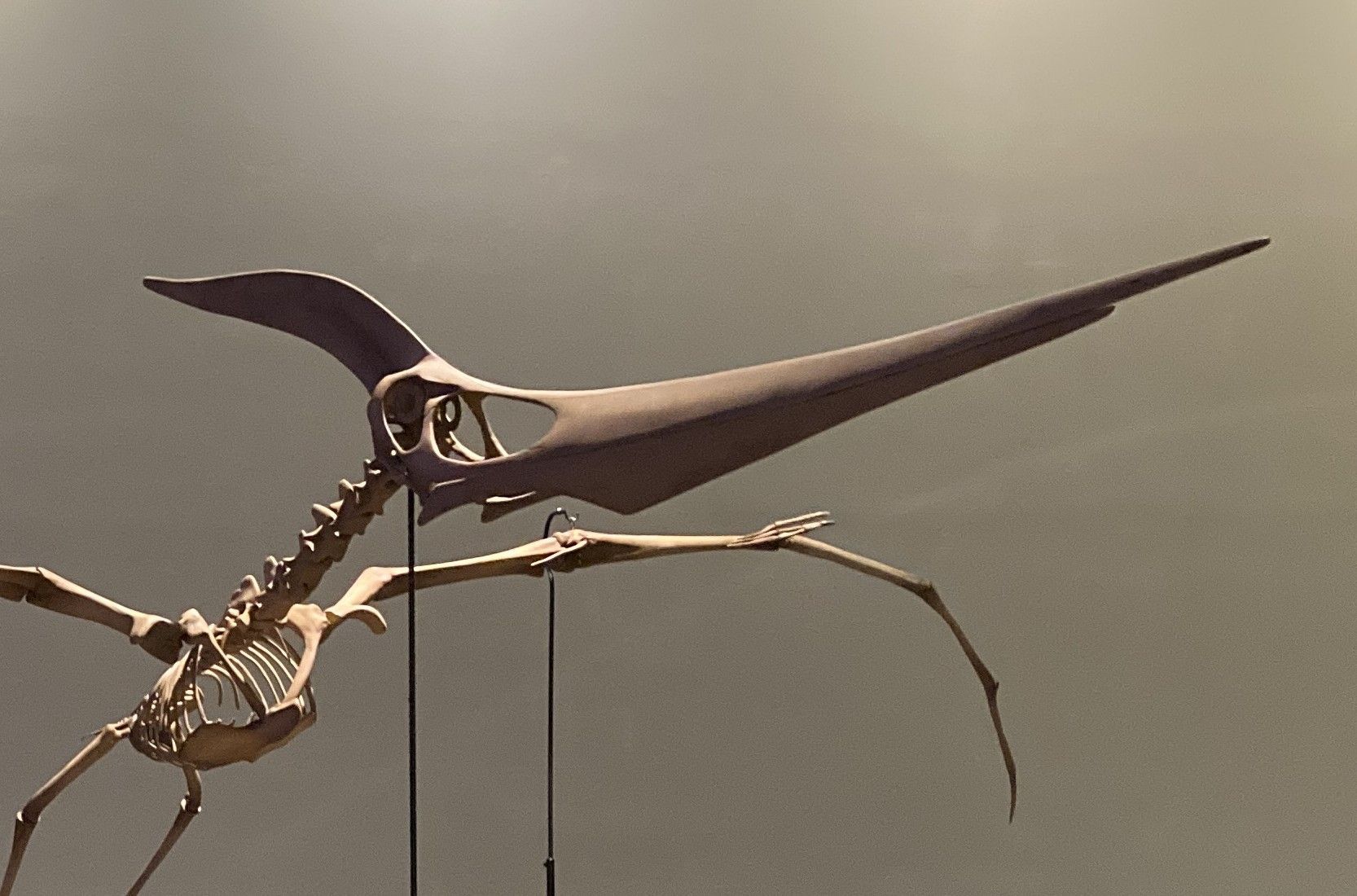
24ft Pteranodon longiceps
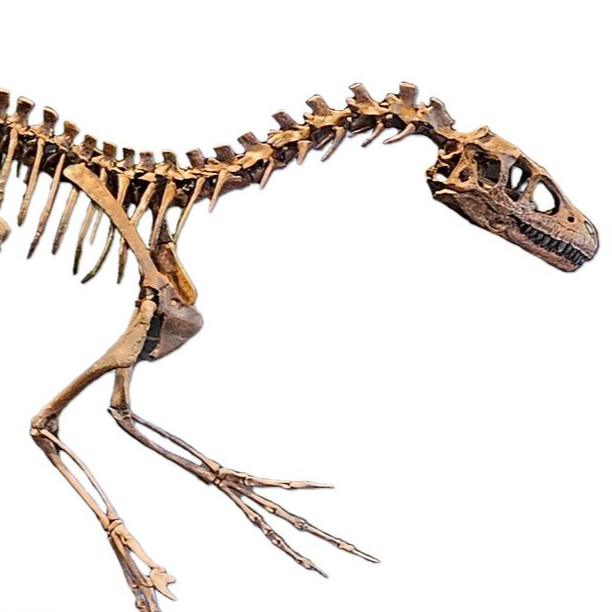
Dromaeosaurus albertensis
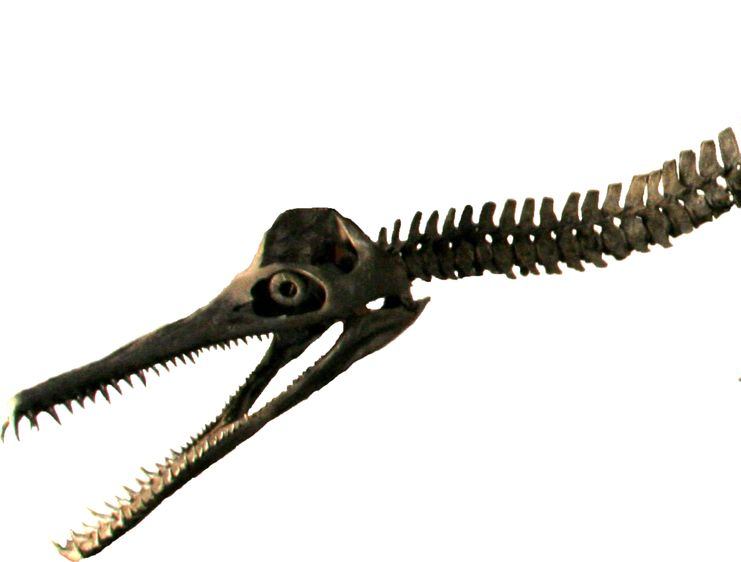
Martinectes bonneri
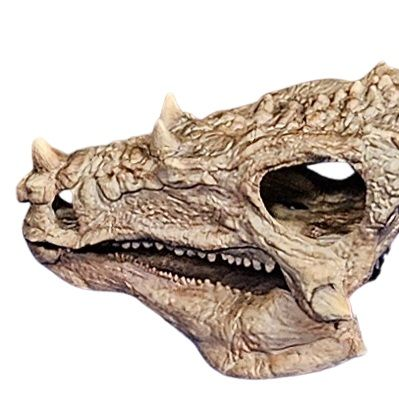
Dracorex hogwartsia
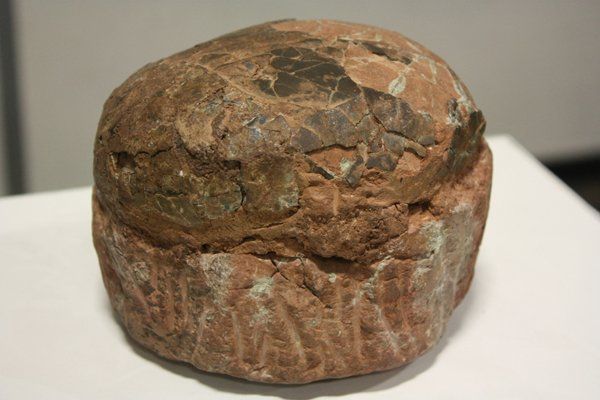
Dinosaur Egg
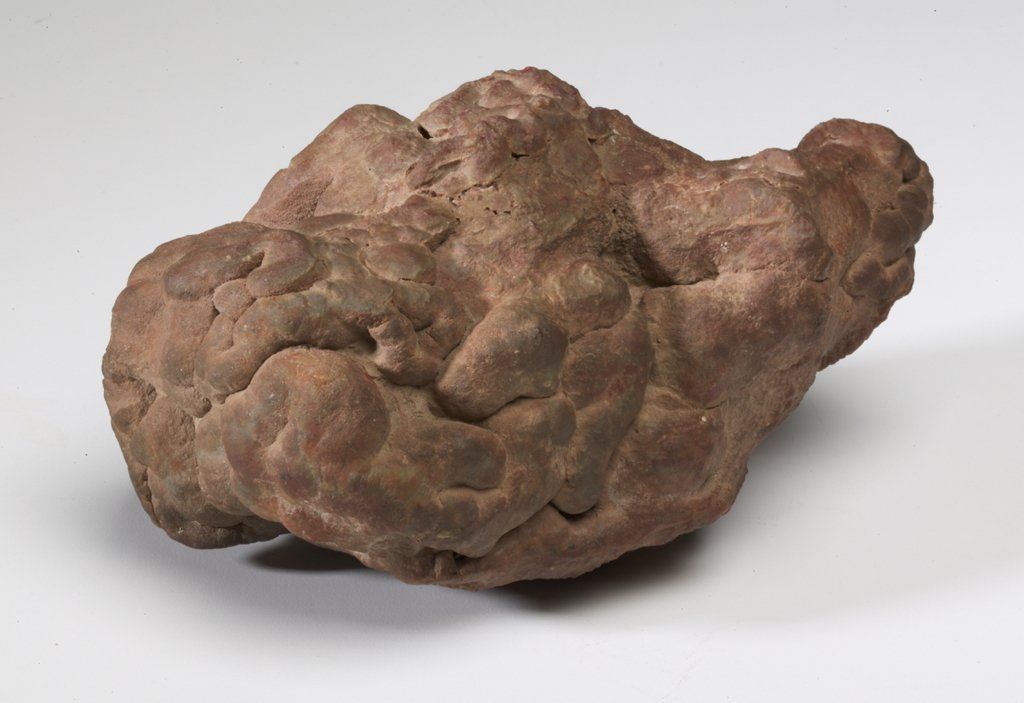
Coprolite (Fossil Excrement)
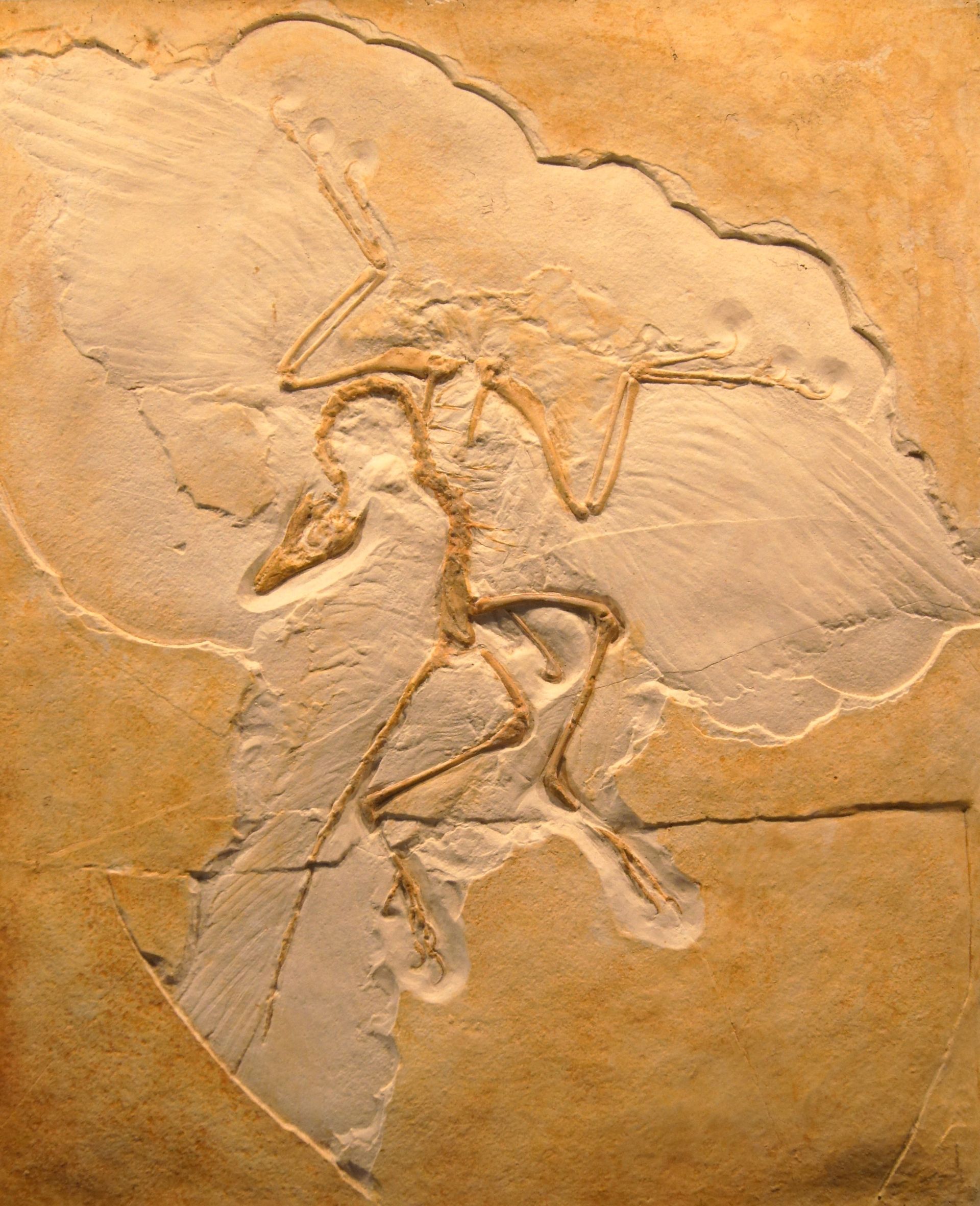
Archaeopteryx siemensii
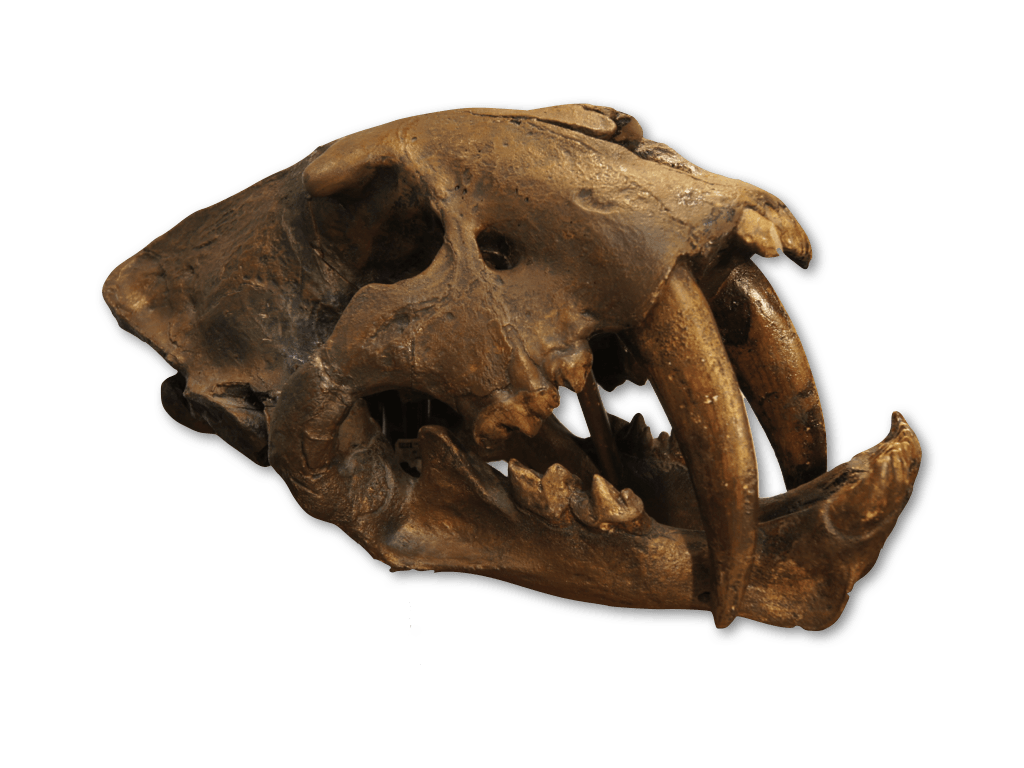
Smilodon californicus